Economy · Shopping · Real Estate
Doha Market Trends 2026
Doha's market landscape in 2026 runs on three separate tracks. Souq Waqif keeps its footing through festivals and steady gold pricing rather than footfall records, national consumer prices are climbing a moderate 2 to 3 percent a year, and the property market just hit a five-year index high on strong mortgage lending and freehold demand in Lusail and The Pearl.
What Are the Current Trends in Doha's Traditional Souqs?
Doha's heritage markets are not shrinking in the face of mall culture. Instead, Souq Waqif and its neighboring Gold Souq have leaned into scheduled events, food exhibitions and a pricing structure that treats visitors and residents the same, which keeps them relevant for both day-trippers and long-term expats. For opening hours, the Falcon Souq and how to reach the area by metro, see the full Souq Waqif guide.
Souq Waqif in 2026: Festivals Over Footfall Numbers
Qatar does not publish a public footfall counter for Souq Waqif, so the clearest 2026 trend signal is event density rather than a single visitor total. The fourth Souq Waqif International Dates Exhibition ran in February 2026 at the market's Eastern Square, drawing 57 exhibiting companies from six countries (source: The Peninsula Qatar, 6 February 2026). Weeks later, the second Asian Nuts and Dried Fruits Exhibition brought more than 40 companies from nine countries to the same square, timed to run into the Ramadan shopping season (source: The Peninsula Qatar, 23 February 2026).
The pattern matters for travel planning more than it matters for shopping bargains: these exhibitions add temporary stalls, extended evening hours and competitive pricing on dates, nuts and dried fruit for roughly two to three weeks each, mostly clustered around February and Ramadan. Outside those windows, Souq Waqif operates on its standard year-round schedule.
The Gold Souq: How Prices Actually Work for Visitors
The Gold Souq sits directly beside Souq Waqif, near the Corniche, and houses more than a hundred independent jewelers in narrow covered alleys (source: QatarGoldLive.com, accessed 30 August 2026). The metal price itself is not negotiable and does not differ between tourists and residents; what varies is the making charge, the labor fee added per gram. Souq jewelers typically quote QAR 4 to 8 per gram for standard pieces, against QAR 8 to 14 per gram at mall-based chain retailers, according to the same source. Treat those figures as a starting point for negotiation, not a fixed tariff, since making charges are set shop by shop.
Gold itself moves with the global spot price and is unrelated to any single souq. As a snapshot, 24-karat gold traded around QAR 554.50 per gram in late August 2026 (source: QatarGoldLive.com, accessed 30 August 2026); check a live rate before buying, since it changes daily.
Local vs Tourist Pricing: Is There a Difference?
For gold, no. Expats and tourists buy at the same metal rate as residents, both at the Gold Souq and in branded stores. The real pricing lever for visitors is the making charge, and the only way to capture the souq's usual discount over mall pricing is to ask for it directly, ideally after comparing two or three stalls.
How Have Consumer Prices Changed in Doha in 2026?
Qatar's overall price level moved up through the first half of 2026, though the pace has been uneven quarter to quarter rather than a steady climb. The data comes from the National Planning Council, the body that absorbed Qatar's former Planning and Statistics Authority under Amiri Decision No. 13 of 2024 (source: The Peninsula Qatar, 3 May 2024).
Qatar's Official Inflation Numbers, Quarter by Quarter
| Period | CPI (2018=100) | Change vs prior period | Change year-on-year |
|---|---|---|---|
| February 2026 | 110.60 | +0.64% (MoM) | +2.51% |
| Q1 2026 | 110.65 | -0.50% (QoQ) | +2.98% |
| April 2026 | 110.61 | -0.74% (MoM) | +2.62% |
| June 2026 | 110.12 | +0.06% (MoM) | +2.21% |
Source: Qatar News Agency, reporting National Planning Council data, May and June 2026 releases. The index tracks 737 goods and services across 12 groups, rebased to 2018 using the 2017/2018 Household Income and Expenditure Survey.
Read across the four readings, year-on-year inflation held in a narrow 2.2 to 3.0 percent band through the first half of 2026, which counts as mild by regional standards and gives visitors a reasonably stable basis for budgeting a trip planned months in advance.
What Is Getting More Expensive, and What Isn't
The Q1 2026 release breaks out which categories moved the index. Comparing Q1 2026 against Q4 2025, "miscellaneous goods and services" rose 3.35 percent and "food and beverages" rose 2.06 percent, while "recreation and culture" fell 8.29 percent and "restaurants and hotels" edged down 0.53 percent (source: Qatar News Agency, 12 May 2026). For a visitor, the practical read is that dining out and cultural activities were, if anything, a relative bright spot in that quarter, even as everyday grocery costs pushed the headline number higher.
Why There's No VAT Refund at Hamad International Airport
Qatar signed the GCC VAT Framework Agreement in 2016 but had not implemented VAT as of mid-2026, so there is no tourist VAT refund counter at Hamad International Airport, unlike in several neighboring Gulf states (source: Fiscal Solutions, April 2026 update). That absence of VAT is itself a standing price trend worth knowing before you shop: listed prices are what you pay, with no refund process to plan around, and ordinary duty-free retail at the airport remains the only tax-advantaged option. For a full shopping-tax breakdown by mall, see the Doha shopping guide.
What Is Happening in Qatar's Real Estate Market in 2026?
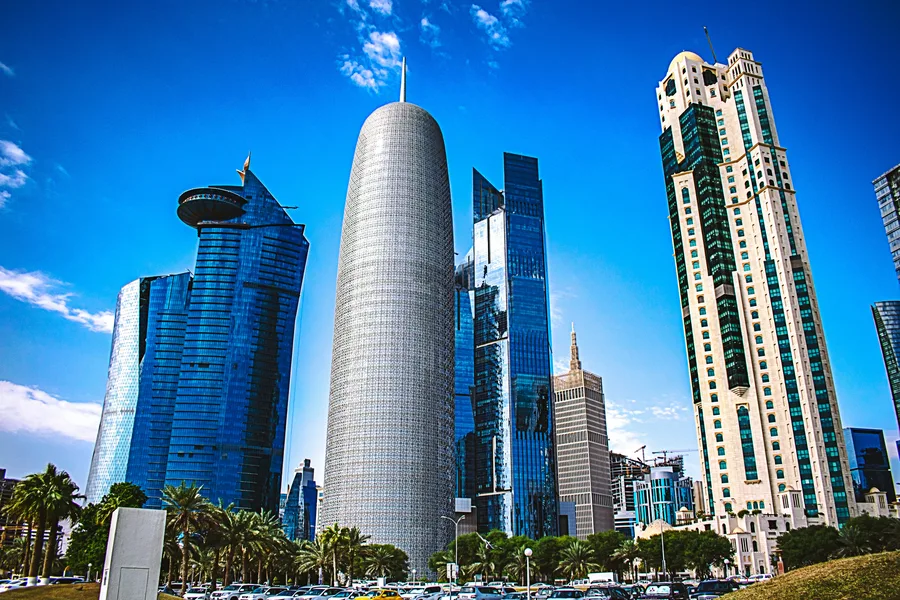
Property is the fastest-moving of Doha's three markets in 2026, and the direction is up. That matters for visitors too: Qatar's freehold and usufruct system lets long-stay residents, retirees and investors buy rather than only rent, which shapes everything from Lusail's skyline to Msheireb's older-district redevelopment. Background on both areas is in the Lusail city guide and the Msheireb Downtown Doha guide.
The Qatar Central Bank Property Price Index Hits a Record
The Qatar Central Bank's Real Estate Price Index reached 244.56 points in May 2026, its highest reading since the current index series launched in June 2021, up 8.7 percent year-on-year and 1.28 percent from April (source: Arab News, reporting Qatar Central Bank data, 25 June 2026). The index is built from actual sale-and-purchase transactions registered with the Ministry of Justice, using 2014 as its base year, so it reflects completed deals rather than asking prices.
The rebound follows a softer patch after the 2022 FIFA World Cup, when prices had been declining on a 12-month basis. Brokerages now describe the market as moving into a more mature, less volatile phase rather than a speculative spike.
Where Foreigners Can Legally Own Property
Non-Qataris cannot buy property anywhere in the country. Ownership rights exist only inside government-designated zones created under Council of Ministers Decision No. 28 of 2020, which set up two tiers covering 25 areas in total: nine zones with full freehold ownership, including West Bay, The Pearl, Lusail, Al Khor Resort and Onaiza, and sixteen zones with 99-year usufruct rights, including Msheireb, Al Sadd and the area around Doha International Airport (source: Invest Qatar, official government investment promotion agency, 7 October 2020).
Some Qatar-based real estate brokerages report that additional freehold projects have been designated since 2020, including newer beach-resort developments (source: FG Realty, a Qatar property brokerage, 2026). Direct access to the Ministry of Justice's own listing was not available from this research environment at the time of writing, so treat any zone list beyond the original 2020 decision as reported by industry sources pending confirmation, and verify the current, official boundary of any specific plot with the Ministry of Justice before signing anything.
Residency Through Property Investment: What the Thresholds Actually Are
| Investment tier | Approximate threshold | Residency benefit |
|---|---|---|
| Temporary residency | QAR 730,000 (about $200,000) | Renewable residence permit, tied to continued ownership |
| Permanent residency | $1,000,000 or more | Permanent residency, with benefits such as government healthcare access |
These figures come from secondary legal-advisory sources rather than a Ministry of Justice document accessed directly for this article, so confirm the exact current threshold and required paperwork with a licensed Qatari immigration lawyer before relying on them for a residency application.
Rental and Villa Trends According to ValuStrat
Independent valuation firm ValuStrat's Price Index, which covers over 90 percent of Qatar's freehold locations, showed residential capital values flat quarter-on-quarter but up 1.1 percent year-on-year in the second half of 2025, reaching 97.6 points, with villa values specifically up 1.3 percent (source: ValuStrat, reported by Consultancy-me.com, early 2026). Demand concentrated in affordable villa communities, particularly Ezdan-developed areas, while renewed developer interest emerged around Huzoom Lusail after a long stretch of tight villa supply. Total residential stock in Qatar stood at 404,612 units by the end of that period, split between 255,959 apartments and 148,653 villas.
On the commercial side, ValuStrat's office rental index rose about 1 percent against Q4 2024, with analysts expecting elevated new office supply to keep rental growth contained even as government and multinational tenants keep occupancy strong in premium buildings.
Frequently Asked Questions
Is Doha's Souq Waqif getting more expensive for tourists in 2026?
There is no published price index for souq goods specifically. Gold prices track the global market and are identical for tourists and residents; only the making charge, typically QAR 4 to 8 per gram at the souq, is negotiable. Textiles, spices and dates fluctuate with seasonal exhibitions rather than a steady trend.
What is Qatar's current inflation rate?
Year-on-year inflation ran between 2.2 and 3.0 percent across the four 2026 readings published through June, based on National Planning Council data reported via Qatar News Agency. That is a moderate, relatively stable rate by regional comparison.
Can tourists get a VAT refund when shopping in Doha?
No. Qatar had not implemented VAT as of mid-2026 despite signing the GCC VAT Framework Agreement in 2016, so there is no refund scheme at Hamad International Airport. See the shopping guide for the full breakdown.
Can foreigners buy property in Doha?
Only inside government-designated freehold or usufruct zones set out in Council of Ministers Decision No. 28 of 2020, covering 25 areas including The Pearl, Lusail, West Bay and Msheireb. Buying outside these zones is not legally possible for non-Qataris.
Is Qatar's property market currently rising or falling?
Rising, according to the Qatar Central Bank's Real Estate Price Index, which hit a record 244.56 points in May 2026, up 8.7 percent year-on-year. That follows a decline in the period after the 2022 World Cup.
How much do I need to invest in Qatari property for residency?
Reported thresholds are around $200,000 for a renewable residence permit tied to continued ownership and $1 million or more for permanent residency, per secondary legal-advisory sources. Confirm exact current figures with a licensed Qatari immigration lawyer, since this is not verified against a Ministry of Justice document accessed directly.
Continue exploring: Souq Waqif, the Doha shopping guide and the Lusail city guide cover the day-to-day side of these three markets in more depth.
Sources
- Arab News, reporting Qatar Central Bank Real Estate Price Index data, 25 June 2026.
- Qatar News Agency (QNA), reporting National Planning Council CPI data, May, March and June 2026 releases.
- Consultancy-me.com, reporting the ValuStrat Qatar Price Index, early 2026.
- Invest Qatar (IPA Qatar), official government source, 7 October 2020.
- Ministry of Justice, Qatar, on non-Qatari real estate ownership conditions. Accessed via search index; direct moj.gov.qa access failed from this research environment.
- FG Realty, Qatar real estate brokerage blog, 2026, secondary source on freehold zones added since 2020.
- Fiscal Solutions, on Qatar's VAT status, April 2026 update.
- The Peninsula Qatar, on Souq Waqif exhibitions and the National Planning Council's creation, February 2026 and 3 May 2024.
- QatarGoldLive.com, on Gold Souq jeweler count and making-charge ranges. Not an official regulator.
This page summarizes publicly reported market, price and real estate data for general information only. It is not financial, tax, immigration or legal advice. Property ownership rules, residency thresholds and freehold zone lists are set by the Qatari Ministry of Justice and Council of Ministers and can change; verify current conditions with the Ministry of Justice or a licensed Qatari lawyer before signing any purchase or investment agreement. Gold and consumer prices are point-in-time figures and move daily. All figures accessed 2026-08-30.