Explore
MIA Park
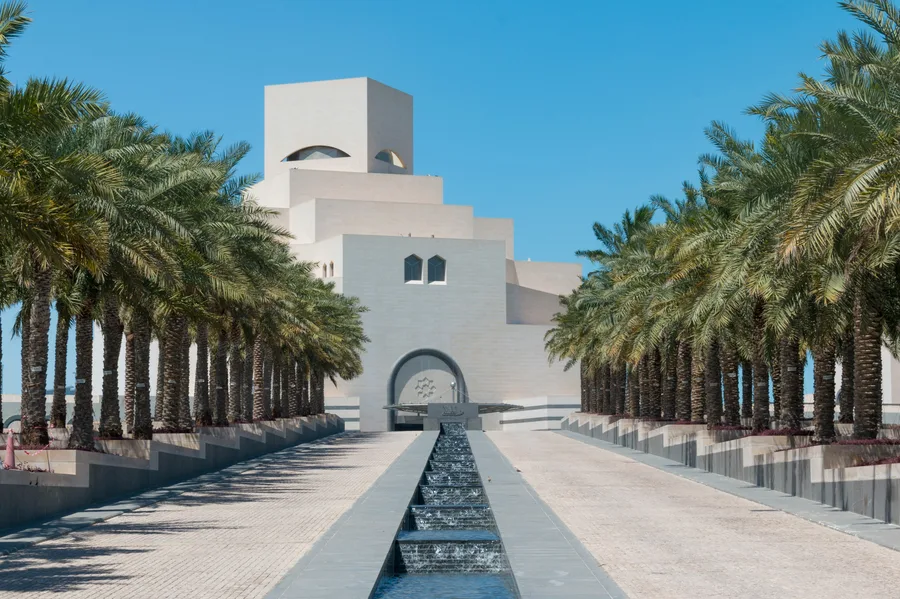
MIA Park is the free, 24-hour waterfront park wrapped around the Museum of Islamic Art on Doha's Corniche, with a lit promenade along the bay, a cafe, playgrounds, bike rental and four permanent outdoor sculptures, including Richard Serra's steel plate work 7 (source: mia.org.qa, accessed 2026-08-26).
MIA Park is not the Museum of Islamic Art itself. The museum building, its I. M. Pei architecture and its collection have their own guide on this site (see Museums in Doha); this page covers only the park around it, the part most visitors actually walk through, sit in or picnic on before or after the galleries, or instead of them.
What is MIA Park?
MIA Park is a public green space built on reclaimed land off Al Corniche Street, wrapping the Museum of Islamic Art's peninsula on three sides. It opened alongside the museum's 2008 debut and is maintained by Qatar Museums as an open, unticketed extension of the site (source: mia.org.qa; Museum of Islamic Art, Wikipedia, accessed 2026-08-26). Unlike the museum, which keeps set visiting hours and is closed on Wednesdays, the park itself is open 24 hours a day, every day (source: mia.org.qa, accessed 2026-08-26). The land underneath both the museum and its park is artificial: construction of the peninsula began in December 2003, extending the Corniche outward into Doha Bay to create the crescent-shaped landfill the park now sits on, ahead of the museum building's completion in late 2008 (source: architecturalrecord.com; Museum of Islamic Art, Wikipedia, accessed 2026-08-26).
How big is MIA Park and what pathways does it have?
Published figures for the park's size do not agree: one aggregator gives roughly 25 hectares (about 62 acres), another gives about 68 acres, and neither traces back to an official Qatar Museums figure, so treat the exact area as unconfirmed rather than repeat one number as fact (secondary sources, accessed 2026-08-26). What is consistently reported is the shape of the walk: close to 2km of lit, stone pedestrian pathways trace the waterline in a crescent, with an 800m palm-lined promenade section connecting the museum building to a smaller reclaimed peninsula at the park's tip (secondary sources, accessed 2026-08-26). In practice, that gives a comfortable 20 to 30-minute loop for a visitor who wants a walk without committing to the length of the full Corniche.
What can you do at MIA Park?
- Walk or run the crescent promenade, a paved, lit waterfront path used by both tourists and Doha residents, especially in the cooler evening hours.
- Picnic on the lawns facing West Bay, one of the most-cited reasons locals visit on weekends (source: mia.org.qa, accessed 2026-08-26).
- Eat at the Park Café, which serves sandwiches, salads and pastries with a view over the water (source: mia.org.qa, accessed 2026-08-26); pop-up food trucks also appear at times.
- Rent a bicycle from onsite stations with both adult and children's bikes (source: mia.org.qa, accessed 2026-08-26).
- Let children use the playground, which is split into three age-appropriate sections covering ages 2 to 16 (source: mia.org.qa, accessed 2026-08-26).
- See permanent outdoor art without paying museum admission (detailed below).
- Catch a pop-up event: the park hosts film screenings, sports activities, workshops and the recurring Park Bazaar market on selected weekends (source: mia.org.qa, accessed 2026-08-26).
What sculpture and public art is at MIA Park?
Four works are permanently installed in the park, confirmed directly on the museum's own visitor page rather than assumed from secondary write-ups (source: mia.org.qa, accessed 2026-08-26):
7, by Richard Serra
Seven tall steel plates arranged to form a heptagon, a reference to the significance of the number seven in Islamic numerology and geometry. It stands at the tip of the park's peninsula and is one of the most photographed pieces on the Corniche.
Folded Extracted Personified, by Liam Gillick
An interactive installation with cut-out panels visitors can put their heads through, a more playful counterpoint to Serra's monumental steel.
Bench, by Saloua Raouda Choucair
A functional sculpture-bench by the pioneering Lebanese modernist artist, doubling as public seating along the park.
Rock on Top of Another Rock, by Fischli and Weiss
A large, deliberately precarious-looking stacked-boulder work by the Swiss artist duo, playing with scale and balance in a public setting.
For sculpture and installations elsewhere in the city, see the Art in Doha guide, which covers Katara's public artworks and other pieces outside the museum district.
Rules and etiquette at MIA Park
The park publishes a short conduct list rather than leaving it to guesswork: no littering, conservative dress is expected in a public Qatari park, children must be supervised in the playground areas, and bicycles and smoking are not allowed inside the playgrounds themselves. Swimming, fishing, barbecues, open fires and pets are all prohibited park-wide (source: mia.org.qa, accessed 2026-08-26).
Is MIA Park good for families?
Yes, more so than most Doha attractions that charge per person. The playground's three age bands (2-16) mean younger and older children each get equipment sized for them rather than one generic climbing frame, and the paved crescent pathway is flat and stroller-friendly for the full loop rather than only near the entrance (source: mia.org.qa, accessed 2026-08-26). Shade is limited outside the palm-lined promenade stretch, so families visiting in the warmer months are better off timing a playground trip for morning or early evening rather than midday.
Where to get the best skyline view and photos at MIA Park
The park's peninsula tip, where Richard Serra's 7 stands, faces directly across the bay toward the West Bay skyline and gives an unobstructed line for photos of Doha's high-rise cluster, particularly at sunset when the towers catch the light. The palm-lined promenade section offers a second, closer-in vantage back toward the museum building itself. Neither spot needs a ticket or a set time slot, which is part of why the park draws as many photographers as the museum does.
What to combine a MIA Park visit with
Because the park sits between the museum and the Corniche, it works naturally as a link rather than a standalone stop. A common route: walk the Corniche toward the museum peninsula, loop MIA Park, then either go into the Museum of Islamic Art itself or continue toward Souq Waqif for food and shopping. Visitors staying in West Bay or on The Pearl-Qatar are a short taxi from the park; see hotels in Doha for options near the museum district, and restaurants in Doha for a sit-down meal beyond the park's own cafe.
Getting to MIA Park
MIA Park sits off Al Corniche Street on the same peninsula as the Museum of Islamic Art, a short walk from the Corniche promenade and from Souq Waqif. It's reachable on foot from the Corniche, by taxi or ride-hailing app, or via Doha Metro to a Corniche-area station followed by a short walk; the museum itself notes a free shuttle bus for visitors, and onsite parking exists but fills quickly on weekends (source: mia.org.qa; museums.html, accessed 2026-08-26). Because the park has no gates or ticket check, there's no fixed "arrival time" the way there is for the museum: turn up whenever suits your schedule.
Is MIA Park wheelchair accessible?
The museum publishes a dedicated accessibility page for the wider MIA site, though it does not break out separate technical detail for the park's own paths versus the museum building (source: mia.org.qa, accessed 2026-08-26). What can be confirmed directly: the crescent promenade is a paved, flat, stroller- and wheelchair-friendly surface for its full length, since it doubles as the park's cycling route and needs to be rideable rather than stepped. Anyone with specific mobility requirements should check the museum's accessibility page directly before visiting, since this article cannot confirm kerb heights, ramp gradients or accessible parking counts.
Best time to visit MIA Park
Given Doha's climate, the park is at its most comfortable in the early morning or from late afternoon into the evening, when the lit pathways and cooler air draw the largest number of walkers and runners. Midday between roughly May and September brings extreme heat with little shade beyond the palm-lined promenade section, so plan any picnic or playground visit around the cooler parts of the day rather than midday in summer.
Frequently Asked Questions
Is MIA Park free to enter?
Yes. MIA Park has no admission fee and is open 24 hours a day, separate from the Museum of Islamic Art itself, which keeps its own ticketed hours and is closed on Wednesdays (source: mia.org.qa, accessed 2026-08-26).
What sculpture is at MIA Park?
Four permanent works: Richard Serra's 7, seven stacked steel plates referencing Islamic numerology; Liam Gillick's Folded Extracted Personified; a bench by Saloua Raouda Choucair; and Fischli and Weiss's Rock on Top of Another Rock (source: mia.org.qa, accessed 2026-08-26).
How big is MIA Park?
Sources disagree: some put it at roughly 25 hectares (62 acres), others at about 68 acres, with close to 2km of lit pedestrian pathways along the water. Treat the exact figure as unconfirmed until Qatar Museums publishes one (secondary sources, accessed 2026-08-26).
Continue exploring: walk on to the Corniche, step inside the Museum of Islamic Art itself, or browse the city's other public sculpture in the Art in Doha guide.